
GE Motion Sensor LED Night Light (6-Pack)
Six plug-in motion sensor night lights with adjustable brightness and auto-off timer — covers every outlet along the bed-to-bathroom path in one purchase.
Price: ~$19.99 | Rating: 4.7/5 (5,662 reviews)
The most dangerous sentence in a senior's home is "I can see the door." Said at noon, standing, with full daylight streaming through the curtains, it's true. Said at 2 AM, emerging from deep sleep, with eyes adapted to darkness and a bladder demanding immediate attention, it's a lie. The eyes that could see the door at noon cannot see it at 2 AM — and the body that could navigate the hallway at noon cannot navigate it at 2 AM either.
The CDC reports that bathroom trips are the #1 fall scenario for adults 65+, and the majority of those falls occur between 11 PM and 6 AM. The NIH has published research showing that inadequate nighttime lighting is a primary modifiable risk factor for falls in older adults — modifiable meaning you can fix it with a $12 product and 10 minutes of installation.
The fix isn't a brighter overhead light. Bright overhead lights at 2 AM cause pupillary constriction, melatonin suppression, and a full awakening that makes returning to sleep difficult. The fix is low-level, warm-spectrum, motion-activated lighting that illuminates the path without waking the brain.
This guide covers seven motion sensor night lights across five categories: plug-in, stick-on, bedside, under-bed, and outdoor. Each serves a different zone in the nighttime fall prevention system.
Last updated: August 2026.
 ►
►
Watch: The Nightlight That Prevents Falls for Aging Parents at Night
Six plug-in motion sensor night lights with adjustable brightness and auto-off timer — covers every outlet along the bed-to-bathroom path in one purchase.
Price: ~$19.99 | Rating: 4.7/5 (5,662 reviews)
The path from bed to bathroom typically passes through 3-4 outlet locations: bedroom, hallway, bathroom. A 6-pack of plug-in motion sensor lights covers all of them with spares for the kitchen and living room paths. This is the system approach — not one light, but a chain of lights that activates sequentially as the person moves through the house.
The GE lights detect motion within 15 feet and activate instantly. The brightness is adjustable (low/medium/high), which matters because the ideal brightness for 2 AM is different from the ideal brightness for 6 AM. On low, the light is enough to see the floor and doorway without triggering full pupillary constriction. On high, it's enough to find a dropped pill or read a medication label.
The auto-off timer (30 seconds, 5 minutes, or constant-on) lets you tune the behavior. For the hallway, 30 seconds is fine — the person passes through in under 10. For the bathroom, 5 minutes gives time to use the toilet and wash hands without the light cutting out mid-task.

Battery-powered stick-on LED light bars with magnetic mounting — install anywhere without outlets, including closet shelves, stair landings, and bed frames.
Price: ~$9.99 | Rating: 4.2/5 (18,634 reviews)
Not every fall-risk zone has an outlet. The top of the stairs, the inside of a closet, the bed frame, the space between the nightstand and the wall — these are locations where a plug-in light can't go, but a stick-on light can. The Amir's magnetic mounting system means you can attach the adhesive magnetic strip to any surface (wood, drywall, metal, plastic) and then snap the light on and off for battery changes.
The light bar design casts a wider beam than the typical puck-style stick-on light, which makes it better for illuminating a path rather than a spot. The motion sensor activates within 10 feet and stays on for 20 seconds — short enough to conserve batteries, long enough to illuminate a step or a reach.
Battery life is 3-4 months on a set of 4 AAA batteries per light, assuming 8-10 activations per night. The lights also have a constant-on mode for use as closet or cabinet lighting during the day.

Simple, reliable plug-in motion sensor night lights from a trusted battery brand — no adjustable features, just dependable illumination when you need it.
Price: ~$15.99 | Rating: 4.7/5 (15 reviews)
Sometimes you don't want 7 brightness settings and 3 timer modes and adjustable sensor range. Sometimes you want a light that plugs in, turns on when you walk by, and turns off when you leave. That's the Energizer. No configuration, no app, no batteries to replace. Plug it in and forget about it.
The warm white LED (2700K) is a deliberate design choice that's better for nighttime use than the cool blue-white LEDs in cheaper models. As NIH research on light and sleep has established, blue-spectrum light suppresses melatonin production — the hormone that regulates sleep cycles. Older adults already produce less melatonin; exposing them to blue-spectrum light during a 2 AM bathroom trip makes returning to sleep harder and compounds fall risk through sleep deprivation.
The light activates within 10 feet and stays on for 30 seconds after motion stops. The form factor is compact — it doesn't block the second outlet in a standard duplex, which matters in older homes where outlets are scarce.

Amber-spectrum motion sensor night lights specifically designed to preserve melatonin production — the only color temperature that illuminates without disrupting sleep architecture.
Price: ~$16.99 | Rating: 4.7/5 (16,636 reviews)
Here's the problem with most night lights, including some on this list: they emit blue-spectrum light. Not a lot — these are 0.5W LEDs — but enough that a 2 AM activation suppresses melatonin production for 30-60 minutes after exposure. For a senior who's already struggling with sleep fragmentation (the natural consequence of aging's effect on sleep architecture), this suppression makes the 3 AM return to sleep harder, which leads to daytime drowsiness, which leads to balance impairment, which leads to falls.
Amber light (1800K color temperature) sits outside the melanopsin sensitivity curve — the photoreceptor in the eye that signals melatonin suppression. Amber light illuminates the visual cortex without activating the circadian system. Translation: you can see where you're walking, but your brain stays in sleep mode.
The MAZ-Tek is the only amber-spectrum motion sensor night light with reliable reviews on Amazon. It has the same plug-in, motion-activated, auto-off functionality as the GE and Energizer, but with a spectrum that's specifically designed for nighttime use. If sleep quality is a concern (and for seniors, it almost always is), this is the right choice.

Rechargeable bedside light bar with motion activation and adjustable color — designed to illuminate the critical sit-to-stand transition at the edge of the bed.
Price: ~$16.99 | Rating: 4.4/5 (290 reviews)
The most dangerous moment of the nighttime bathroom trip isn't the walk — it's the sit-to-stand transition at the edge of the bed. The body has been supine for hours, blood pressure is at its lowest, orthostatic hypotension is common, and the person is reaching for stability in darkness. This is where bed rails and bedside lighting intersect.
The LOFTEK light bar is designed to sit on the nightstand or mount to the bed frame, positioned to illuminate the exact area where feet meet floor. The motion sensor activates when the person swings their legs off the mattress — before they stand — providing illumination for the transition. The rechargeable battery lasts 8-10 weeks per USB charge, which means no battery replacement and no cord trailing to an outlet.
The adjustable color (warm white, amber, cool white) lets you tune the spectrum for sleep protection. On amber mode, this is the most sleep-safe option on the list because it combines motion activation with the correct spectrum and targeted placement.

Solar-powered motion sensor lights for outdoor walkways, driveways, and entry steps — no wiring required, illuminates the path from car to door after dark.
Price: ~$24.66 | Rating: 4.5/5 (34,643 reviews)
Indoor falls get the attention, but outdoor falls account for a significant portion of senior fall injuries — particularly the transition from car to front door, where uneven walkways, steps, and seasonal ice create hazards that don't exist inside. The car-to-door path is often unlit because it wasn't designed as a walking path; it was designed as a parking spot.
Solar motion sensor lights solve this without wiring. Mount them to the garage wall, fence post, or exterior wall with the included hardware. The solar panel charges during the day; the light activates at dusk when motion is detected within 26 feet. The LED output is significantly brighter than indoor night lights — enough to illuminate a full walkway and steps, not just a path.
Battery life is season-dependent: 8-10 hours of illumination per full charge in summer, 4-6 hours in winter. For most users, this is sufficient since the lights only activate on motion, not continuously. The 2-pack covers the garage-to-door path and the back or side entrance.

LED light strip that mounts under the bed frame, illuminating the floor around the bed — eliminates the "step into nothing" moment that causes the most common bedroom falls.
Price: ~$45.99 | Rating: 4.4/5 (4,779 reviews)
Bedside night lights illuminate the nightstand area but miss the floor around the foot of the bed — the exact zone where slippers live (or don't), where the reacher grabber was set down, and where the dog sleeps. Stepping into this zone without seeing the floor is how toes get stubbed, slippers get missed, and balance gets lost.
The Ezvalo is a 6.5-foot LED strip that mounts under the bed frame with adhesive backing. The motion sensor hangs below the bed skirt line and activates when feet appear over the edge of the mattress. The strip illuminates the floor in a 3-foot radius around the bed — enough to see slippers, obstacles, and the path to the door.
The USB power option means you can run it from a bedside USB port or a wall adapter, and there's no battery to replace. The light is dimmable, and on the lowest setting, it's subtle enough to not disturb a sleeping partner. On the highest setting, it's bright enough to read by.
The under-bed light strip (Ezvalo) handles the floor. The bedside light bar (LOFTEK) handles the sit-to-stand transition. Together, these two lights cover the most dangerous moment of the nighttime trip.
Plug-in motion sensor lights (GE 6-pack or Energizer) placed every 8-10 feet along the hallway from bedroom to bathroom. Each light activates as the person approaches and deactivates after they pass, creating a "walking trail" of illumination.
One amber light (MAZ-Tek) in the bathroom, positioned to illuminate the toilet area without casting glare off the mirror. The amber spectrum preserves night vision — the person can see the toilet but their eyes stay dark-adapted, making the return trip to bed safer.
Solar lights (Aobei) on the walkway from the driveway to the front door. This handles the after-dark return from appointments, social events, or errands.
Q: Where should motion sensor night lights be placed?
A: Beside the bed (sit-to-stand transition), every 4-6 feet along the bed-to-bathroom path, in the bathroom doorway, and at the toilet area. The goal is continuous illumination along the entire path.
Q: Are motion sensor night lights better than always-on?
A: Yes. Motion sensor lights preserve sleep by activating only when needed. Always-on lights suppress melatonin, which is already reduced in older adults.
Q: What color temperature is best for nighttime?
A: Amber or warm light (2700K or lower, ideally 1800-2200K). Blue-spectrum light suppresses melatonin. Most LED night lights are cool white (6000K+), which is the worst choice for nighttime use.
Q: Do motion sensor night lights use a lot of electricity?
A: No. LED motion sensor lights draw 0.5-1W when active and near-zero in standby. Total annual cost for 6-8 lights is under $2. Battery-powered models last 3-6 months per set.
Nighttime falls are the most predictable, most preventable, and most injurious falls a senior can experience. The path from bed to bathroom is a known hazard, traversed multiple times per night, in darkness, with compromised balance and reduced visual acuity. Lighting that path is not optional — it's the baseline.
The system: GE 6-pack ($25) for the hallway, MAZ-Tek amber ($14) for the bathroom, LOFTEK ($19) for the bedside, and Ezvalo ($25) under the bed. Total: $83 to light the most dangerous path in the house. That's less than the copay on a single fall-related ER visit.
Pair with bed rails for the sit-to-stand transition, grab bars for the bathroom, and non-slip slippers for the walk. For the complete fall prevention catalog, visit our Senior Dignity hub.
Reviewed by Adele, Founder & Senior Gift Curator. Last updated August 2026. This article contains affiliate links and references NIH and CDC research on nighttime falls and melatonin. See our privacy policy for disclosure details.
 ►
►
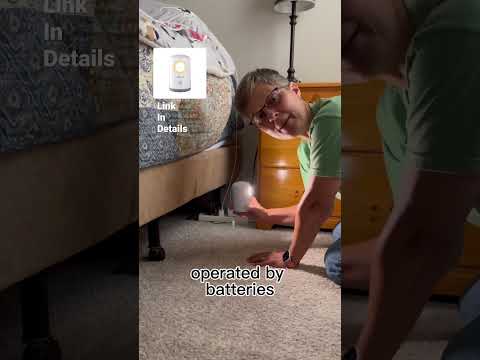
Watch: Night Light Fall Prevention Tips
 ►
►
Watch: Best Night Lights for Seniors