← Back to Daily Supplements
6 Best B-Complex Vitamins in 2026: B1, B2, B5, B6, B9, B12
B-vitamins are the body's metabolic spark plugs. Each one serves as a coenzyme — a molecule that activates an enzyme to perform its function. According to the NIH Office of Dietary Supplements, B-vitamins convert food into energy, synthesize neurotransmitters, produce red blood cells, and maintain the myelin sheath that protects nerves. Yet many people take them without understanding the critical difference between active and inactive forms.
Here is the key insight: the B-vitamins on most drugstore shelves (folic acid, cyanocobalamin, pyridoxine) are inactive forms that your body must convert before use. For up to 40% of the population with an MTHFR gene variant, that conversion is impaired. This guide covers six individual B-vitamins in their most bioavailable forms — because sometimes the right supplement is the one your body can actually use.
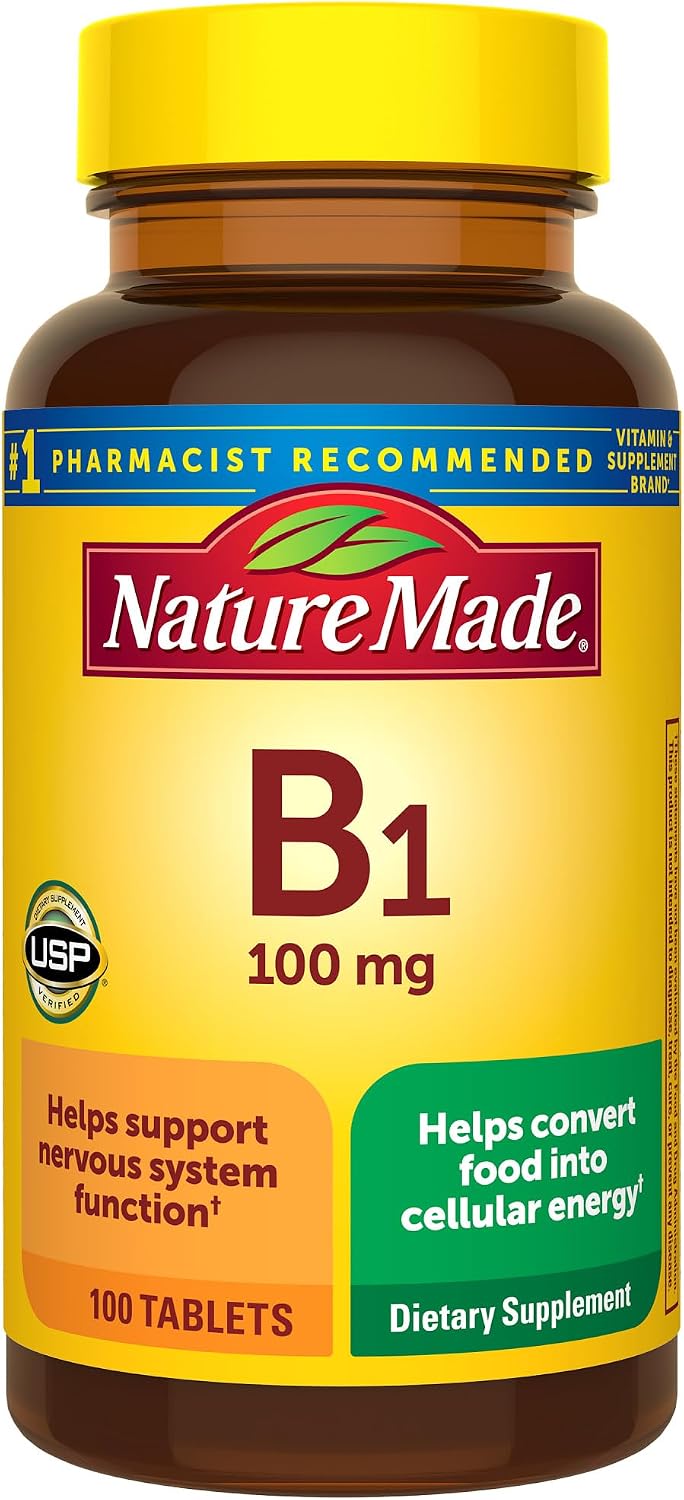
1. Nature Made Vitamin B1 (Thiamine) 100mg, 100 Tablets — Best for Energy
Best for Energy
Nature Made Vitamin B1 100mg
Nature Made Vitamin B1 provides 100mg thiamine per tablet for carbohydrate metabolism, energy production, and nervous system function. USP verified, gluten-free.
Price: $6.69 | Rating: 4.7/5 (19,650 reviews) | Form: Thiamine HCl | Servings: 100
SHOP
Thiamine (B1) is the energy vitamin. It's the coenzyme for pyruvate dehydrogenase, the enzyme that converts carbohydrates into acetyl-CoA, which enters the Krebs cycle to produce ATP. Without adequate thiamine, carbohydrate metabolism stalls — you feel fatigued, brain-fogged, and irritable. Severe deficiency (beriberi) causes nerve damage and heart failure, but subclinical deficiency is far more common and manifests as low energy.
Nature Made's B1 is straightforward: 100mg thiamine HCl per tablet, USP-verified for purity and potency, gluten-free. At $6.69 for 100 tablets (a 100-day supply at 1 tablet/day), the cost is $0.07 per day. This is one of the cheapest legitimate supplements you can buy. The USP verification matters — it means an independent lab confirmed the label claim. Many supplement brands don't bother with USP verification.
Thiamine HCl is the standard form — it's well-absorbed and effective for most people. The 100mg dose is high relative to the RDA of 1.2mg, but thiamine is water-soluble and excess is excreted. High-dose thiamine is sometimes used for cognitive support, especially in people who consume alcohol (alcohol impairs thiamine absorption and storage).
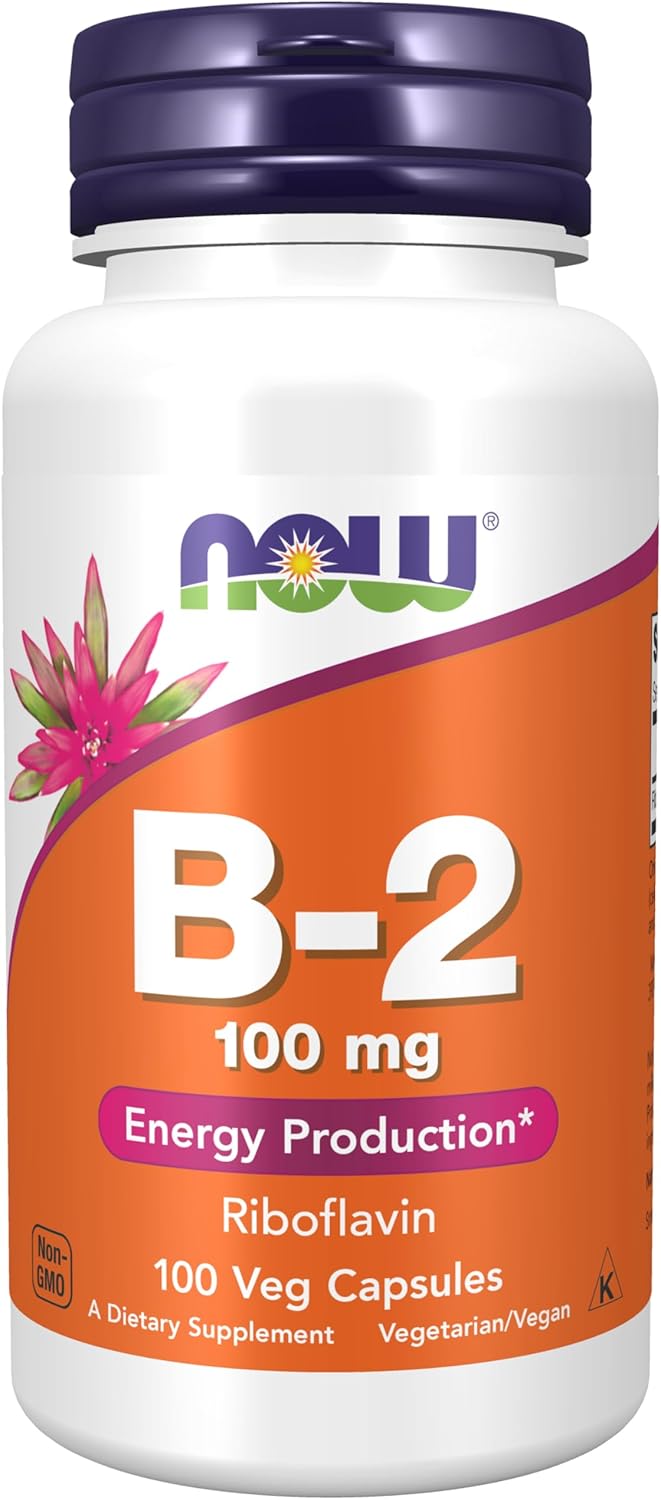
2. NOW Vitamin B-2 (Riboflavin) 100mg, 100 Veg Capsules — Best for Migraines
Best for Migraines
NOW Vitamin B2 (Riboflavin)
NOW Vitamin B-2 provides 100mg riboflavin per capsule for energy metabolism, antioxidant protection, and migraine prevention support. Vegetarian, kosher, non-GMO.
Price: $6.11 | Rating: 4.7/5 (4,210 reviews) | Form: Riboflavin | Servings: 100
SHOP
Riboflavin (B2) doesn't get the attention B12 gets, but it's essential for two reasons. First, it's a precursor for FAD and FMN — coenzymes that participate in energy metabolism and the glutathione antioxidant system (the body's master antioxidant). Second, and more interestingly, high-dose riboflavin (400mg/day) has been shown in clinical trials to reduce migraine frequency in some patients.
The NOW product provides 100mg per capsule — lower than the 400mg used in migraine studies, but sufficient for general health. For migraine prevention, you'd take 4 capsules daily. At $6.11 per bottle, that's $0.24/day for 400mg — dramatically cheaper than migraine medications. The capsules are vegetarian, kosher, and non-GMO.
One harmless side effect: riboflavin turns urine bright fluorescent yellow. This is normal and indicates the body is processing the excess. Your body absorbs what it needs and excretes the rest.
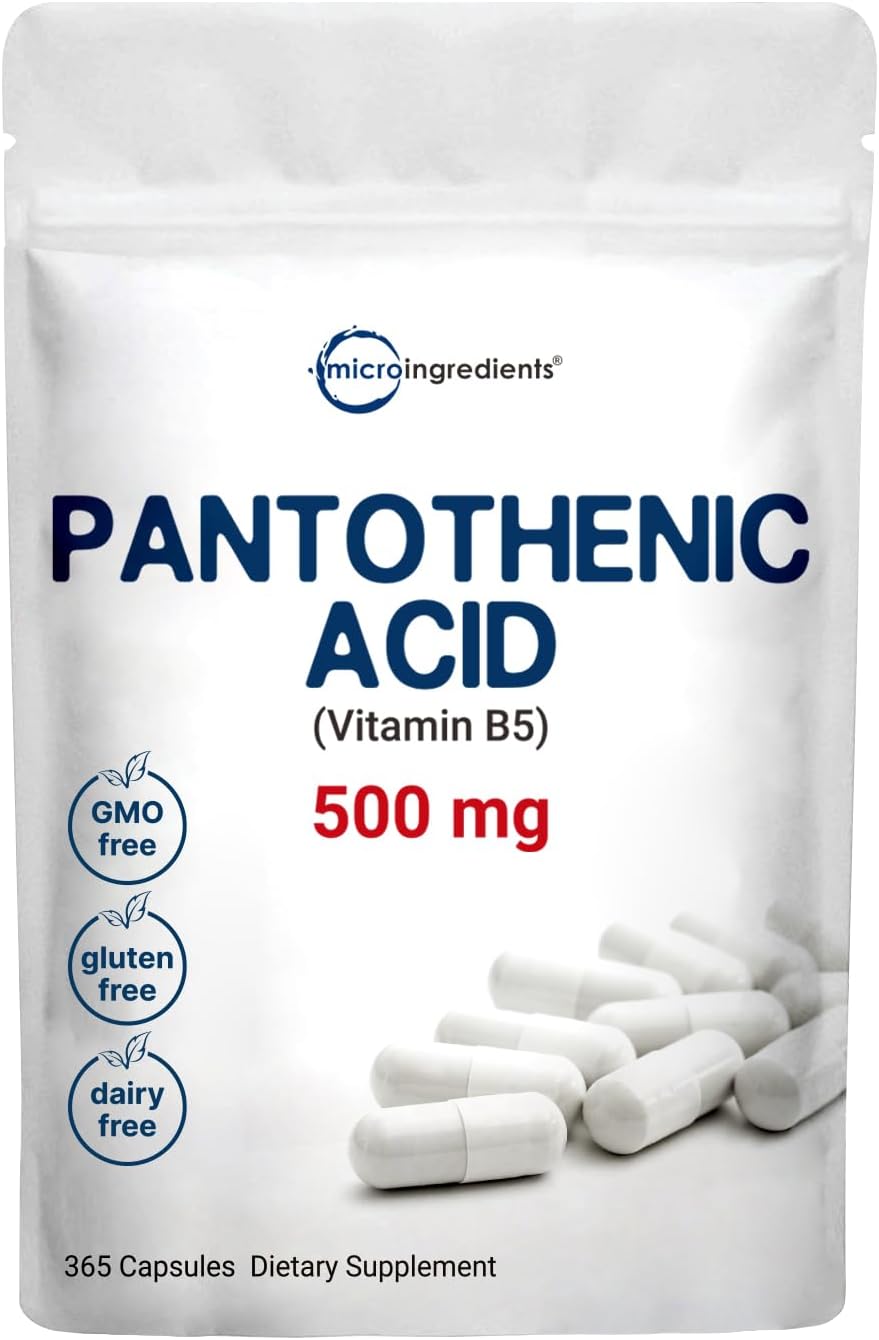
3. Micro Ingredients B5 500mg
Best Value
Micro Ingredients B5 500mg
Micro Ingredients B5 500mg
Price: $19.99 | Rating: 4.7/5 (781 reviews) | Form: Pantothenic Acid | Servings: 365
SHOP
Pantothenic acid (B5) is named after the Greek word "pantothen" meaning "from everywhere" — because it's found in virtually every food. True deficiency is rare. So why supplement? Two reasons: adrenal support and acne treatment. B5 is a cofactor for cortisol synthesis (the stress hormone produced by the adrenal glands), and some studies suggest high-dose B5 may help reduce acne by decreasing sebum production.
Micro Ingredients offers 365 capsules at 500mg each — a full year supply for $19.99. That's $0.05/day, making it the best value supplement on this list. The bulk count makes it practical to combine with other B-vitamins without worrying about running out every month.
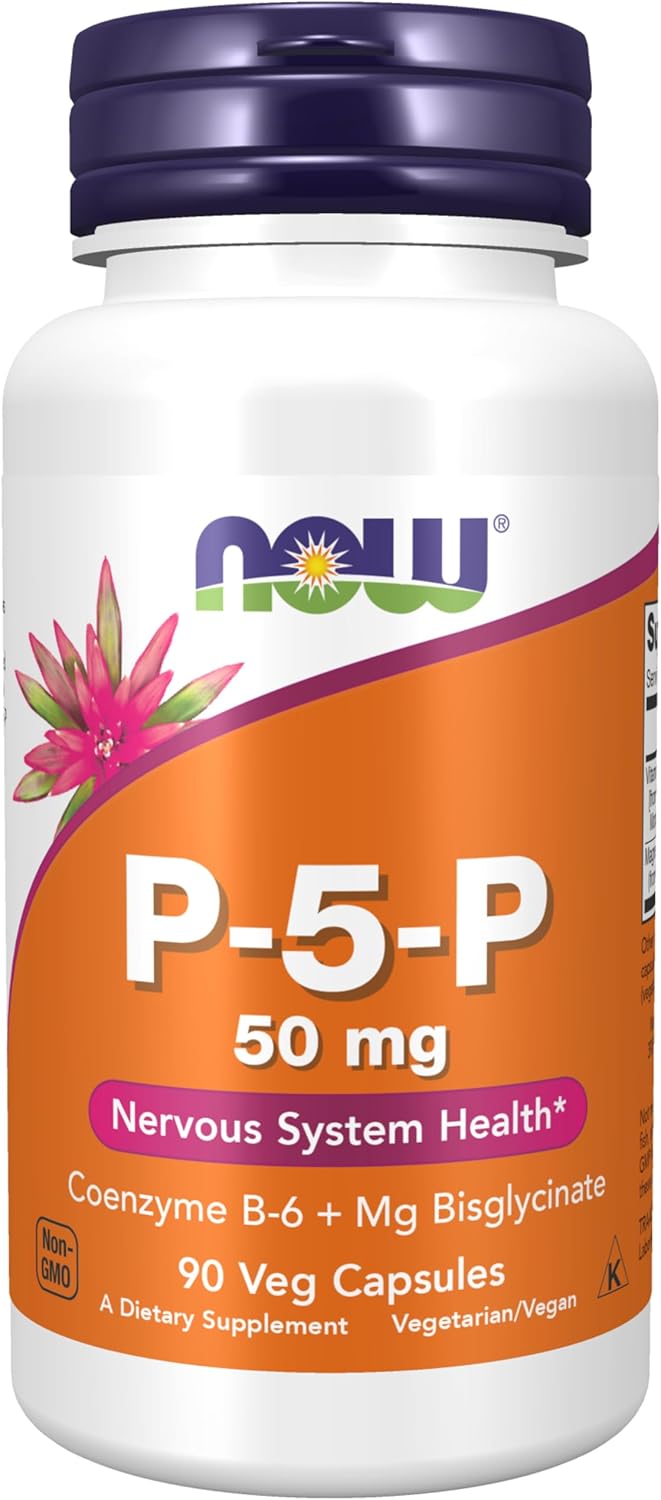
4. NOW P-5-P 50mg with Coenzyme B-6 + Mg Bisglycinate — Best Active B6
Best Active B6
NOW P-5-P with B6
NOW P-5-P provides pyridoxal-5-phosphate (P-5-P), the active coenzyme form of vitamin B6, paired with magnesium bisglycinate for synergistic nervous system support. 90 vegetarian capsules.
Price: $12.70 | Rating: 4.6/5 (1,618 reviews) | Form: P-5-P (active B6) | Servings: 90
SHOP
Standard B6 supplements use pyridoxine HCl — the inactive form that the liver must convert to pyridoxal-5-phosphate (P-5-P) before the body can use it. This conversion is impaired in some individuals, particularly those with liver issues or genetic variants. P-5-P skips the conversion step entirely.
B6 is critical for neurotransmitter synthesis (serotonin, dopamine, GABA), amino acid metabolism, and homocysteine regulation. Elevated homocysteine is a risk factor for cardiovascular disease, and B6 (along with B9 and B12) is required to convert homocysteine back to methionine. NOW smartly pairs P-5-P with magnesium bisglycinate, which is also involved in neurotransmitter function — a nice synergistic combination. For more on magnesium, see our magnesium supplements guide.
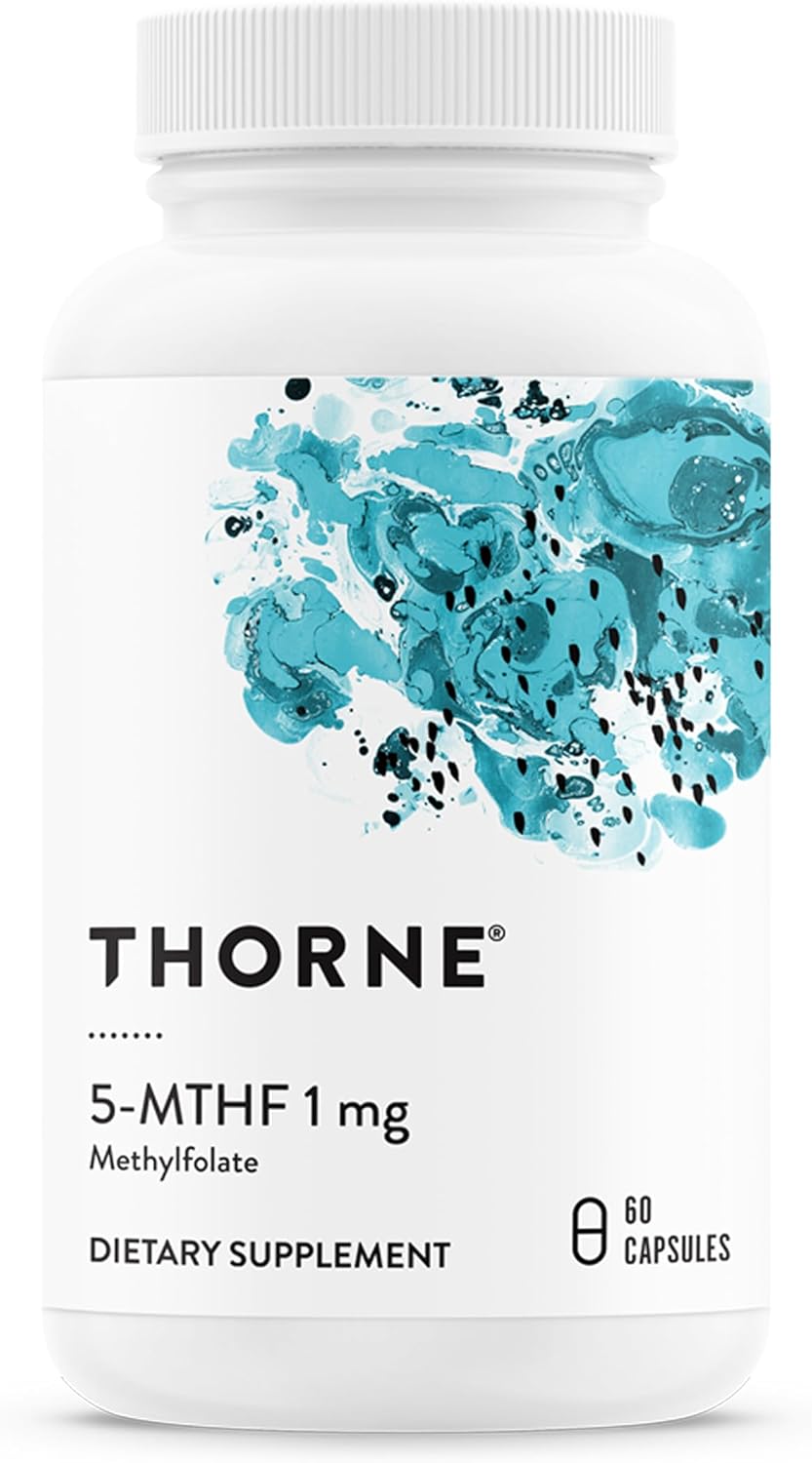
5. Thorne 5-MTHF 1mg, Active Methylfolate B9 — Best for MTHFR
Best for MTHFR
Thorne Methylfolate B9
Thorne 5-MTHF provides 1mg L-5-methyltetrahydrofolate — the active form of folate that bypasses MTHFR conversion. Essential for methylation, DNA synthesis, and homocysteine regulation.
Price: $24.00 | Rating: 4.7/5 (4,085 reviews) | Form: 5-MTHF (active folate) | Servings: 60
SHOP
This is the most important B-vitamin to get right. Folic acid (the synthetic form found in most supplements and fortified foods) must be converted by the MTHFR enzyme into 5-MTHF (methylfolate) before the body can use it. Approximately 40% of the population has an MTHFR gene variant (C677T or A1298C) that may reduce this conversion. For these individuals, folic acid can build up in the blood as unmetabolized folic acid — which may not be harmless.
Thorne's 5-MTHF provides L-5-methyltetrahydrofolate — the active, bioavailable form that requires no conversion. It's the form that directly participates in the methylation cycle, converting homocysteine to methionine. Elevated homocysteine is a well-established cardiovascular risk factor, and the NIH identifies folate as essential for DNA synthesis, cell division, and preventing neural tube defects in pregnancy.
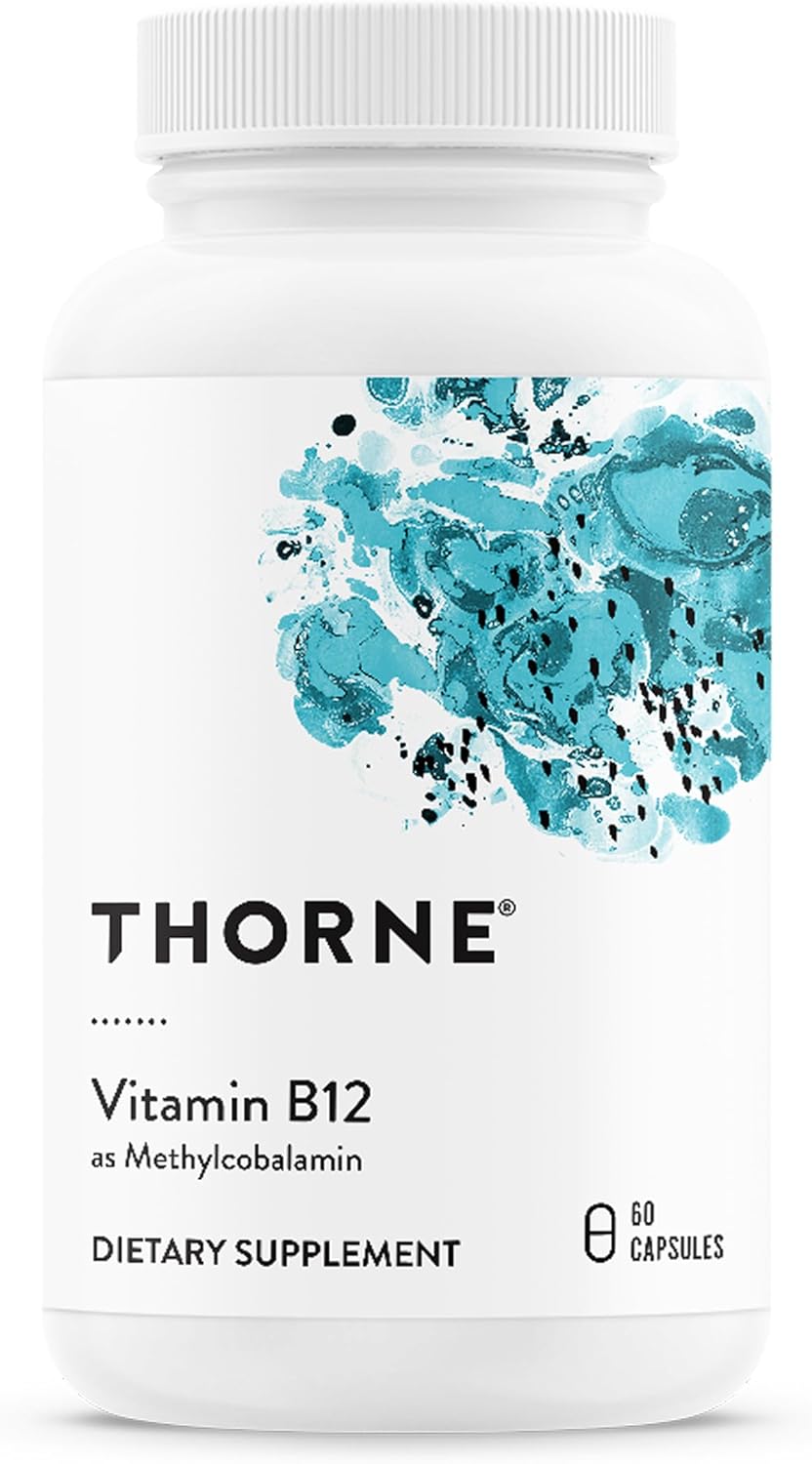
6. Thorne Vitamin B12 1,000mcg, Active Methylcobalamin — Best B12
Best B12
Thorne B12 Methylcobalamin
Thorne Vitamin B12 provides 1,000mcg methylcobalamin — the active form of B12 that supports nerve function, red blood cell production, and cognitive health. 60 vegetarian capsules.
Price: $24.00 | Rating: 4.8/5 (3,906 reviews) | Form: Methylcobalamin | Servings: 60
SHOP
Vitamin B12 deficiency is the silent epidemic most people don't know about. The NIH reports that up to 20% of older adults have low B12 levels. Symptoms develop slowly: fatigue, memory issues, tingling in hands and feet, and eventually irreversible neurological damage. Vegans and vegetarians are at particular risk because B12 is only found in animal products.
Thorne uses methylcobalamin — the active form of B12 — rather than cyanocobalamin (the cheaper, inactive form used in most drugstore brands). Methylcobalamin is the form that circulates in the blood and enters cells directly. Cyanocobalamin must be converted to methylcobalamin in the body, and this conversion is impaired in some individuals.
The 1,000mcg dose is appropriate for both deficiency correction and maintenance. At this dose, even people with absorption issues (pernicious anemia, celiac disease, low stomach acid) can absorb enough via passive diffusion — which accounts for about 1% of the dose. That's why high-dose oral B12 can replace injections for most people.
Active vs Inactive Forms: Why It Matters
B6: Pyridoxine vs P-5-P
Pyridoxine HCl is the inactive form. P-5-P (pyridoxal-5-phosphate) is the active coenzyme form. The liver converts pyridoxine to P-5-P, but this conversion can be impaired. High-dose pyridoxine (200mg+/day long-term) can actually cause peripheral neuropathy — a risk not seen with P-5-P.
B9: Folic Acid vs Methylfolate
Folic acid requires MTHFR conversion. Up to 40% of the population has reduced MTHFR activity. Unmetabolized folic acid can build up in the blood. Methylfolate (5-MTHF) is the active form that requires no conversion.
B12: Cyanocobalamin vs Methylcobalamin
Cyanocobalamin contains a cyanide molecule (tiny, harmless, but still) that must be cleaved before the body can use it. Methylcobalamin is the active form that circulates in blood and enters cells. It's also the form that the brain prefers for neurotransmitter synthesis.
FAQ
What is the difference between B1 and B12 vitamins?
B1 (thiamine) converts carbohydrates into energy. B12 (methylcobalamin) makes red blood cells and maintains the myelin nerve sheath. B12 deficiency is far more common, especially in vegans and older adults. B1 deficiency is rare but can occur with heavy alcohol use.
Should I take methylfolate or folic acid?
Methylfolate works for everyone, including those with MTHFR gene variants. Folic acid requires conversion that up to 40% of people can't do efficiently. When in doubt, choose methylfolate.
What are the signs of B-vitamin deficiency?
Fatigue (B1, B5, B12), cracked lips (B2), tingling in extremities (B6, B12), poor memory (B1, B6, B9, B12), elevated homocysteine (B6, B9, B12). Severe B12 deficiency causes irreversible nerve damage. Ask your doctor for a B12 and homocysteine test if you suspect deficiency.
Can you take too many B vitamins?
B vitamins are water-soluble and excess is excreted, making toxicity rare. However, high-dose B6 (above 200mg/day long-term) can cause neuropathy. The NIH sets the UL for B6 at 100mg/day. Follow label dosing.
← Back to Daily Supplements